
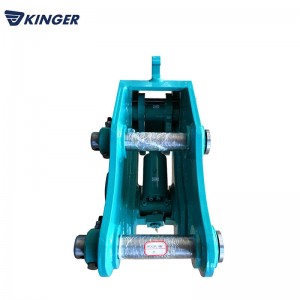
content="Comprehensive guide to hydraulic forestry machinery manufacturers, suppliers and exporters. Expert-verified industry information, specifications, applications, quality standards and sourcing tips.">
This expert-verified guide is designed for global buyers, importers, distributors and procurement teams
who are searching for reliable hydraulic forestry machinery manufacturers, suppliers and exporters.
It provides neutral, company-agnostic information about definitions, classifications, performance parameters,
quality standards, safety requirements and sourcing strategies that can be used for blog posts, directory pages
and industry landing pages.
Hydraulic forestry machinery refers to professional logging, harvesting and wood-handling equipment in which the
primary working functions (lifting, cutting, delimbing, loading, driving attachments) are powered by a
hydraulic system. These machines operate with hydraulic pumps, valves, cylinders and motors that transmit
power through pressurized hydraulic oil rather than only mechanical or electric drives.
In modern logging operations, almost all high‑productivity equipment falls into the category of
hydraulic forestry machinery, including harvesters, forwarders, feller bunchers, skidders,
loaders and specialized attachments such as grapples and saw heads. Manufacturers and suppliers focus on
hydraulic design because it delivers high force density, precise control and adaptability to different
forestry attachments.
Buyers and procurement engineers typically select hydraulic forestry equipment for a combination of
performance, safety and cost reasons. The main advantages include:
compact actuators, allowing powerful cutting and lifting in relatively small machines.
grapple and saw-head movements with high accuracy, essential for safe and efficient logging.
(harvester head, felling head, grapple, mulcher) to cover a wide range of forestry applications.
low temperatures and uneven ground better than many purely mechanical systems.
overload protection and automatic braking, increasing safety on slopes and in dense stands.
hydraulics and electronic control reduce fuel consumption and heat losses.
spare parts, seals, hoses and fittings are widely available from many suppliers.
Hydraulic forestry machinery manufacturers design equipment for a wide range of forest operations.
Typical application areas include:
cross‑cut trees into merchantable lengths in the forest.
area to roadside or landing sites.
rail wagons or stockpiles.
clean drainage ditches and maintain forest infrastructure.
to hydraulic carriers clear vegetation for replanting, construction or power-line corridors.
branches to produce biomass for energy generation.
low-impact operations in managed forests and sensitive ecosystems.
Hydraulic harvesters are self‑propelled machines that cut trees, delimb them and cut logs to
length using a hydraulic harvester head mounted on a crane or boom. They are common in mechanized
logging operations in softwood plantations and temperate forests.
| Parameter | Typical Range | Notes |
|---|---|---|
| Operating weight | 16,000 – 35,000 kg | Varies with head size and carrier type |
| Engine power | 140 – 250 kW | Diesel engines with hydraulic pumps |
| Hydraulic system pressure | 25 – 35 MPa (250 – 350 bar) | High pressure for cutting and feed rollers |
| Pump type | Variable displacement axial piston | Often load‑sensing, multi‑pump systems |
| Maximum boom reach | 8 – 11 m | Reach from center of rotation |
| Max cutting diameter | 500 – 800 mm | Depends on saw head and application |
| Feeding speed | 3 – 6 m/s | Log feeding rollers driven by hydraulic motors |
| Track / wheel type | Tracked or wheeled | Choice depends on terrain conditions |
Forwarders carry processed logs from the felling site to roadside landings. They are usually
wheeled vehicles equipped with a hydraulic loading crane and grapple, along with a log bunk or
load space for timber.
| Parameter | Typical Range | Notes |
|---|---|---|
| Payload capacity | 8 – 20 tonnes | Small, medium and large forwarders |
| Operating weight | 12,000 – 24,000 kg | Without payload |
| Engine power | 100 – 190 kW | Drives hydraulic pumps and transmission |
| Hydraulic system pressure | 23 – 32 MPa | Cranes often use separate circuits |
| Crane reach | 7 – 10 m | Hydraulic telescopic boom |
| Grapple opening width | 0.8 – 1.6 m | Determines handling capacity |
| Drive type | Hydrostatic or mechanical with hydraulic assist | Depends on manufacturer |
Feller bunchers are machines that cut standing trees and gather them into bunches for later
processing. These can be wheeled or tracked, usually with a powerful hydraulic cutting head.
| Parameter | Typical Range | Notes |
|---|---|---|
| Operating weight | 18,000 – 35,000 kg | Tracked units typically heavier |
| Engine power | 150 – 260 kW | High power for cutting and travel |
| Hydraulic pressure | 27 – 35 MPa | High pressure for saw or shear heads |
| Max cutting diameter | 500 – 750 mm | Depends on head type (disc saw, bar saw or shear) |
| Boom reach | 7 – 10 m | Varies with carrier design |
Skidders drag logs or whole trees from the cutting site to roadside or landing sites.
They typically use hydraulic winches, grapples and steering systems.
| Parameter | Typical Range | Notes |
|---|---|---|
| Operating weight | 10,000 – 20,000 kg | Depending on grapple or cable configuration |
| Engine power | 90 – 190 kW | Designed for pulling performance |
| Hydraulic system | Open or closed center | With dedicated circuits for steering and implements |
| Winch pulling force | 80 – 200 kN | Hydraulically driven winch |
| Grapple area (if fitted) | 0.8 – 1.3 m² | Hydraulic rotation and opening |
Specialized log loaders and hydraulic grapples are used in sawmills, timber yards and
roadside landings to load, unload and sort logs. Many are excavator-based carriers with
forestry-specific booms and control systems.
| Parameter | Typical Range | Notes |
|---|---|---|
| Operating weight (loader) | 12,000 – 35,000 kg | Excavator- or truck-mounted |
| Boom reach | 7 – 12 m | Forestry booms may have higher lift at reach |
| Grapple capacity | 0.4 – 1.5 m² | Hydraulic rotation 360° |
| Hydraulic circuit flow | 120 – 300 L/min | For boom and grapple movements |
| System pressure | 24 – 35 MPa | Typical heavy-duty range |
Hydraulic mulchers, brush cutters and stump grinders are often attachments fitted to skid‑steer
loaders, excavators or dedicated tracked carriers. They are used for vegetation control,
land clearing and biomass production.
| Parameter | Typical Range | Notes |
|---|---|---|
| Carrier weight class | 5,000 – 25,000 kg | Excavator or skid‑steer carrier |
| Required hydraulic flow | 60 – 200 L/min | High‑flow auxiliary circuit required |
| Working width | 1.0 – 2.5 m | Depends on land clearing productivity needs |
| Max shredding diameter | 150 – 400 mm | Tree or stump size that can be processed |
| Rotor speed | 1,800 – 2,500 rpm | Hydraulically driven rotor |
Understanding hydraulic specifications helps buyers compare different forestry machinery manufacturers,
suppliers and exporters. Although each brand has proprietary designs, typical hydraulic systems share
common components and performance parameters.
circuits. May be load‑sensing, variable displacement or fixed displacement.
to booms, sticks, grapples, tracks and attachments.
and breathers.
| Parameter | Typical Range | Relevance for Buyers |
|---|---|---|
| System pressure | 20 – 38 MPa | Higher pressure allows more compact cylinders and motors |
| Total pump flow | 100 – 500 L/min | Determines overall machine speed and productivity |
| Hydraulic oil type | ISO VG 32 – 68 | Selected according to climate and OEM recommendation |
| Filtration rating | 10 – 25 μm absolute | Impacts component life and reliability |
| Cooling capacity | Sized for ambient −30 °C to +40 °C | Important for extreme climates and continuous duty |
| Hydraulic control | Manual, electro‑hydraulic, CAN‑bus | Affects operator comfort and automation options |
When evaluating offers from hydraulic forestry machinery manufacturers, suppliers and exporters,
buyers should consider technical specifications as well as total cost of ownership, operator
safety and after‑sales support.
different undercarriage designs and track options.
and sealed cabins, while hot climates demand stronger cooling systems.
tree size, species and required cutting capacity.
and high‑capacity filtration systems.
Matching hydraulic power, pump flow, attachment size and carrier weight is critical.
Over‑sized machines may cause excessive soil damage, while under‑sized units may not
achieve the required productivity.
Many buyers purchase base carriers and forestry attachments separately from different suppliers.
To ensure compatibility, confirm:
Evaluating only the purchase price of hydraulic forestry machinery can be misleading.
Buyers should estimate total cost of ownership, including:
Reliable hydraulic forestry machinery manufacturers, suppliers and exporters usually work under
recognized quality and safety standards. While this guide does not list individual companies,
buyers can use the following certifications as indicators when choosing partners.
| Standard / Certification | Scope | Relevance for Buyers |
|---|---|---|
| ISO 9001 | Quality Management Systems | Indicates structured processes for design, production and service |
| ISO 14001 | Environmental Management Systems | Shows focus on environmental impact and compliance |
| ISO 45001 / OHSAS 18001 | Occupational Health & Safety | Relevant for worker safety and accident prevention |
| CE Marking (EU) | Compliance with EU machinery directives | Required for sale in the European Economic Area |
| ROPS / FOPS | Cabin rollover and falling object protection | Critical for operator safety in forestry operations |
| Stage V / Tier 4 Final | Emission standards for diesel engines | Important for environmental regulations in many markets |
| EN and ISO Machinery Standards | Specific safety and design criteria | Applies to braking systems, hydraulics and guarding |
Hydraulic forestry machinery operates in inherently dangerous environments. Modern designs
integrate multiple safety systems to protect operators, maintenance staff and bystanders.
rollover or impact from falling trees and branches.
hot surfaces.
output in an emergency.
maintenance work is ongoing.
accessible fire extinguishers.
Even with advanced design, safe operation depends on correct use and maintenance. General practices include:
Preventive maintenance is essential for extending the life of hydraulic forestry machinery and avoiding
unplanned downtime. Approaches can be planned by buyers in contracts with manufacturers, suppliers and
service partners.
| Interval | Task | Purpose |
|---|---|---|
| Daily | Visual inspection of hydraulic hoses, connectors and cylinders | Identify leaks and damage early |
| Daily | Check hydraulic oil level and coolant level | Ensure stable operation of pumps and coolers |
| Weekly | Grease pivot points and boom joints | Reduce wear on moving parts |
| 250 – 500 hours | Replace hydraulic filters (depending on OEM recommendation) | Maintain oil cleanliness for long component life |
| 1,000 – 2,000 hours | Sample hydraulic oil for analysis | Detect contamination and wear particles |
| 2,000 – 4,000 hours | Change hydraulic oil | Prevent degradation and viscosity loss |
| Annually | Inspect pumps, motors and major cylinders | Plan refurbishment or replacement |
Many modern hydraulic forestry machines incorporate telematics and condition monitoring:
Buyers can negotiate these features in supply contracts to optimize maintenance schedules and reduce
lifecycle costs.
Hydraulic forestry machinery is traded internationally by an extensive network of manufacturers,
suppliers, dealers and exporters. Buyers may choose domestic or international sources depending on
machine size, price level, technical requirements and after‑sales expectations.
HS codes for customs declarations and tariffs.
technical manuals and test certificates are required for cross‑border trade.
or be shipped as Ro‑Ro cargo.
may differ by country.
availability and local service partners are essential when importing equipment.
Export prices from hydraulic forestry machinery suppliers and exporters are influenced by:
When researching hydraulic forestry machinery manufacturers, suppliers and exporters, professional
buyers normally follow a systematic sourcing process.
A clear RFQ helps manufacturers propose the most suitable hydraulic forestry machinery.
It should include:
When evaluating offers, buyers should compare not only the base price but also:
For high‑value orders, many professional buyers conduct on‑site or virtual factory audits, or
hire third‑party inspection agencies. Typical checks include:
The following generic matrix illustrates how a buyer might compare offers from several hydraulic
forestry machinery manufacturers without referencing brand names. It can be adapted for blogs,
directories or internal procurement documents.
| Key Spec | Model A (Example) | Model B (Example) | Model C (Example) |
|---|---|---|---|
| Operating weight | 20,000 kg | 24,000 kg | 28,000 kg |
| Engine power | 160 kW | 190 kW | 220 kW |
| Max system pressure | 28 MPa | 32 MPa | 35 MPa |
| Total hydraulic flow | 220 L/min | 280 L/min | 320 L/min |
| Boom reach | 8.5 m | 9.5 m | 10.0 m |
| Max cutting diameter | 550 mm | 650 mm | 700 mm |
| Fuel consumption (avg.) | 18 L/h | 21 L/h | 24 L/h |
| Emission standard | Tier 3 | Tier 4 Final | Stage V |
| Cabin type | Basic ROPS/FOPS | ROPS/FOPS with AC | ROPS/FOPS with AC & advanced seat |
| Telematics | Optional | Standard | Standard with remote diagnostics |
The hydraulic forestry machinery industry is evolving quickly with new technologies to improve
productivity, reduce environmental impact and enhance operator comfort. Key trends include:
electric drives to reduce fuel consumption and noise.
software for automatic leveling, boom tip control and semi‑autonomous harvesting.
harvesting plans and reduced waste.
carriers and optimized harvesting sequences.
virtual fences to protect workers.
to adapt machinery quickly to new tasks.
Hydraulic forestry machinery uses hydraulic pumps, valves, motors and cylinders to power almost all
working functions, providing higher power density, smoother control and better adaptability to
different attachments. Conventional equipment may rely more on mechanical winches and less integrated
hydraulic systems, usually with lower productivity and flexibility.
The appropriate hydraulic pressure and flow depend on the type of forestry attachment, required
cutting forces, boom speed and machine size. Higher pressure allows smaller components, while higher
flow increases movement speed. Buyers should discuss their application details with manufacturers or
technical engineers to match pump size, valve capacity and actuator dimensions.
Many modern hydraulic forestry machines are specifically designed for steep slopes, using
low‑center‑of‑gravity designs, wide tracks, leveling cabins and advanced traction control.
However, not every model is suitable for extreme terrain, so buyers must verify ground pressure,
stability charts and recommended slope limits.
After‑sales service is critical. Forestry operations often run in remote areas and cannot afford
long downtime. When buying from international suppliers or exporters, ensure access to local service
partners, spare parts stock, remote diagnostics and technical support in the local language.
In many cases, yes. Existing carriers can be adapted to new hydraulic attachments if hydraulic flow,
pressure, mechanical interface and stability are compatible. Sometimes an additional auxiliary pump or
upgraded cooling system may be necessary. Buyers should request detailed compatibility studies and
load calculations from suppliers.
Hydraulic forestry machinery has become the backbone of modern logging, harvesting, forwarding and
land‑clearing operations around the world. By understanding the basic types of machines, hydraulic
system specifications, international standards and sourcing strategies described in this guide,
buyers and procurement managers can communicate more effectively with hydraulic forestry machinery
manufacturers, suppliers and exporters, evaluate technical offers more accurately and build
cost‑effective, safe and sustainable forest operations.
This company‑agnostic overview can be used as foundational content for blogs, directories and
industry resource pages focused on hydraulic forestry machinery, helping readers
make informed decisions and connect with suitable manufacturing and supply partners globally.
```
Este site usa cookies para garantir que você tenha a melhor experiência em nosso site.


 English
 Español
 Français
 Italiano
 Nederlands
 Polski
 Română
 lietuvių
 Hrvatski



 Whatsapp
 Telefone
Comente
(0)